
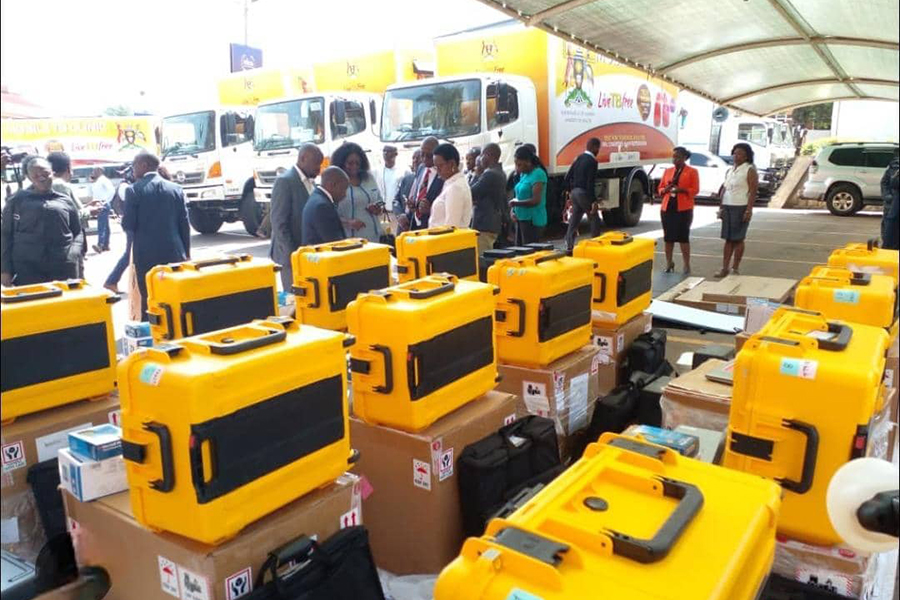
Uganda has stepped up efforts to modernise its fight against tuberculosis (TB) by introducing artificial intelligence (AI)-powered screening tools designed to improve early detection and strengthen community-level health services.
The innovation was launched under the Re-Imagining TB Care (RTC) project, which includes an AI-powered chatbot intended to assist Community Health Workers, particularly Village Health Teams (VHTs), in delivering screening and health education more effectively.
Speaking at a dissemination meeting, Dr Achilles Katamba, a senior lecturer in the Department of Medicine at Makerere University’s College of Health Sciences, said the project aims to transform how TB services are delivered by shifting care closer to communities.
“This project is about changing how TB services are delivered by bringing screening, treatment, and prevention closer to the communities,” Dr Katamba said.
He explained that the AI tools are designed to improve access to accurate health information and support timely decision-making, particularly in underserved areas where diagnostic gaps remain high.
The platform has been adapted into four widely spoken local languages—Lumasaba, Lusoga, Luganda, and Runyankore—to ensure accessibility for frontline health workers interacting directly with communities.
“By translating the tool into local languages, we are making it easier for health workers to communicate and provide services that people can understand and trust,” he said.
Dr. Katamba added that the system has already begun to strengthen the confidence of village health workers, improving how communities perceive and trust them.
“Village Health Teams are now more empowered. They can access accurate information instantly, which has improved how communities perceive and trust them,” he said.
However, he cautioned that the effectiveness of AI-driven health interventions depends on broader infrastructure improvements, including electricity access and internet connectivity.
“AI offers great potential, but we must invest in reliable electricity, internet connectivity, and supportive systems to fully utilize these innovations across the country,” he noted.
Uganda continues to face a significant TB burden, with about 90,000 cases recorded annually. Health officials estimate that while approximately 90 percent of cases are detected, around 8,000 remain undiagnosed each year. Treatment success rates, however, remain relatively high at about 92 percent among those who begin medication.
The RTC project is designed to shift TB care from a centralised system to a community-driven model, with greater involvement of local health workers in identifying gaps in detection and treatment.
The initiative is supported by the Centers for Disease Control and Prevention (CDC) and the Stop TB Partnership, with funding from the Korea International Cooperation Agency (KOICA).
Health experts say that if well implemented and supported, AI-powered tools could play a significant role in closing diagnostic gaps and improving overall healthcare delivery in Uganda’s fight against tuberculosis.
